
A deep cleaning and a regular dental cleaning are two completely different procedures with different goals, different depths, and different patients in mind. If your dentist or periodontist has recently told you that a regular cleaning is no longer enough, you are not alone, and you are not being oversold. Understanding the distinction between the two can actually save your teeth.
This guide breaks down exactly what each procedure involves, who needs which one, what to expect, and why the choice matters far more than most patients realize.
What Is a Regular Dental Cleaning?
A regular dental cleaning, known clinically as prophylaxis, is the standard appointment most people have every six months. It is a preventive procedure designed for patients whose gums are healthy or at very low risk of disease.
During prophylaxis, a dental hygienist removes plaque and calculus (hardened tartar) from the visible surfaces of your teeth and just at the gum line. The process typically includes scaling the crown surfaces, polishing the enamel to remove surface stains, and flossing between teeth. The entire appointment usually takes between 30 and 60 minutes and requires no anesthesia because the work stays above or right at the gum margin where sensitivity is minimal.
The purpose is maintenance, not treatment. Think of it as keeping a clean engine running smoothly rather than repairing a damaged one.
What Is a Deep Cleaning?
A deep cleaning is the common term for scaling and root planing, often abbreviated as SRP. It is a non-surgical therapeutic procedure used to treat active periodontal (gum) disease. This is where the two procedures diverge completely.
Instead of staying above the gum line, deep cleaning goes significantly below it. A periodontist or trained dental hygienist uses an ultrasonic scaler and specialized hand instruments to remove bacterial plaque, calcified tartar, and bacterial toxins from the root surfaces of teeth, all the way down into periodontal pockets that have formed between the gums and the roots.
Once the scaling is complete, root planing begins. The root surfaces are carefully smoothed to eliminate rough areas where bacteria attach and colonize. A smooth root surface makes it much harder for harmful pathogens like Porphyromonas gingivalis and Treponema denticola to re-establish themselves. In many cases, an antibacterial rinse such as chlorhexidine gluconate is flushed into the pockets at the end of the procedure to further reduce the bacterial load.
Because this procedure reaches deeper and more sensitive tissue, local anesthesia is administered to ensure you feel nothing more than mild pressure. The mouth is usually divided into two or four sections (quadrants), and treatment is typically completed over one or two appointments.
The Core Difference: Gum Line vs. Below the Gum Line
The single most important distinction is how far each procedure goes.
Regular prophylaxis works at or above the cementoenamel junction, which is the point where the crown of the tooth meets the root. Scaling and root planing works below it, sometimes extending several millimetres into the periodontal pocket where no toothbrush or regular cleaning instrument can reach.
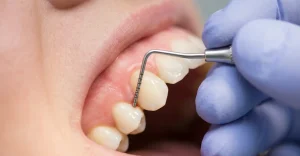
When a periodontist measures your gum pocket depths during an examination using a small probe, the numbers tell the whole story. A healthy sulcus (th
e space between the gum and tooth) measures 1 to 3 millimetres. Readings of 4 millimetres or more typically indicate that gum disease has begun to develop. Once pockets reach 5 millimetres and beyond, bacteria are living in a space that prophylaxis simply cannot access, and deep cleaning becomes medically necessary rather than optional.
Why Pocket Depth Is the Key Diagnostic Factor
Here is what actually happens when those numbers grow. The gums pull away from the tooth root in response to chronic bacterial inflammation, creating a pocket. That pocket becomes a protected environment for anaerobic bacteria, meaning organisms that thrive without oxygen. The deeper the pocket, the more aggressively those bacteria break down the collagen fibres of the periodontal ligament, the tissue that anchors your tooth to the jawbone.
Left unchecked, that destruction moves into the alveolar bone itself. Once bone is lost, it does not regenerate on its own. This is why the stage at which treatment begins determines the outcome so dramatically.
A regular cleaning applied to a mouth with 6 millimetre pockets is like wiping the surface of a wound while the infection is spreading three layers deeper. It does not harm anything, but it does not address the actual problem either.
Signs That You May Need a Deep Cleaning Rather Than a Regular One
There are several signs your mouth may be sending that warrant an evaluation beyond a routine appointment. These include:
Bleeding when you brush or floss that is persistent rather than occasional. Healthy gum tissue does not bleed with normal brushing pressure.
Gums that look red, swollen, or puffy rather than pink and firm. Inflamed gingival tissue is a classic marker of active infection.Gum Disease/Periodontal Disease
A persistent bad taste or bad breath that returns quickly after brushing. This halitosis often comes from the bacterial activity happening below the gum line.
Gum recession, where your teeth appear longer than they used to or where the root surface is becoming visible.
Teeth that feel slightly loose or have shifted position. This is a sign that the supporting bone and ligament structure is being compromised.
Sensitivity to temperature on root surfaces, which can occur when recession exposes the cementum layer.
If you have any combination of these symptoms, the answer is almost never another regular cleaning. It is an evaluation from a periodontist to measure pocket depths, assess bone levels through X-rays, and determine exactly how far the disease has progressed.
What Happens During a Deep Cleaning Appointment in Oakville
When you come in for scaling and root planing at a periodontal practice in Oakville, the appointment follows a specific clinical sequence.
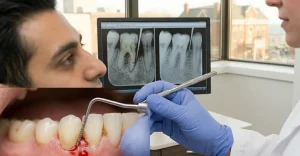
First, your periodontist conducts a comprehensive examination that includes probing every tooth to record pocket depths, reviewing dental X-rays to assess bone levels, and documenting any areas of recession, furcation involvement (where disease has reached the fork of a multi-rooted tooth), or bleeding on probing.
Once the treatment plan is confirmed, local anesthesia is applied to the area being treated that day. Most Oakville patients find that once the area is numb, they feel pressure and vibration but no actual pain.
The scaling phase uses an ultrasonic instrument that produces gentle vibrations to break apart hardened calculus deposits, combined with a water spray that simultaneously flushes out the debris. Hand scalers called curettes then access areas the ultrasonic tip cannot easily reach, carefully debriding the root surface.
Root planing follows using fine curettes to smooth the root surface, removing damaged cementum and any remaining bacterial byproducts. The goal is a clean, biologically compatible surface that the gum tissue can heal against and reattach to.
After the procedure, some practices apply locally delivered antibiotics directly into deeper pockets to suppress any remaining bacteria during the healing period.
Recovery: What to Expect After Deep Cleaning vs. Regular Cleaning
After a regular prophylaxis, most patients walk out with no discomfort whatsoever. You may experience mild sensitivity if your teeth had significant buildup, but this typically resolves within a day.
After scaling and root planing, the recovery is more noticeable but still very manageable. Most patients experience mild to moderate gum tenderness for 3 to 5 days after each quadrant is treated. Tooth sensitivity to cold is also common for the first week or two, particularly on root surfaces that were covered by tartar before. Over-the-counter anti-inflammatory medication such as ibuprofen handles the discomfort for most people.
Eating soft foods for the first 48 hours is advisable. You should also avoid very hot or very cold foods during the sensitivity window, skip vigorous rinsing for the first 24 hours, and hold off on smoking entirely for at least a week since tobacco significantly impairs the healing of gingival tissue.
A follow-up appointment is scheduled approximately 6 to 8 weeks later so your periodontist can reassess pocket depths and confirm that the tissue is healing and reattaching. This appointment determines whether the deep cleaning was sufficient or whether any areas require additional attention.
Deep Cleaning Is Not a One-Time Event: Periodontal Maintenance
One thing that surprises many patients is what comes after a successful deep cleaning. You do not simply return to regular six-month prophylaxis appointments. Instead, you transition to a different schedule called periodontal maintenance, typically every 3 to 4 months.
This is because the biology of your mouth has permanently changed once you have had active periodontitis. The pockets, even when they shrink after treatment, remain more susceptible to re-infection than the gums of someone who has never had the disease. The harmful bacteria that caused the initial infection can begin to rebuild within 90 to 120 days in these pockets, which is exactly why the maintenance interval is compressed compared to a standard prophylaxis schedule.
Periodontal maintenance visits are not the same as regular cleanings. They include careful re-examination of all pocket depths, assessment of bleeding points, and cleaning both above and below the gum line in any areas that show continued activity. Think of it as monitoring and managing a chronic condition rather than simply keeping teeth clean.
Can a Regular Cleaning Cause Any Harm in a Patient Who Needs Deep Cleaning?
This is a question many patients have but rarely ask out loud. The answer is nuanced. A regular cleaning will not make gum disease worse in a direct way, but it creates a false sense of security. A patient who receives prophylaxis when they actually have 5 and 6 millimetre pockets leaves the appointment believing their oral health has been addressed. The bacteria in those pockets are undisturbed, the inflammation continues, and the bone loss progresses silently for another six months until the next appointment.
This is one of the reasons why seeing a periodontist in Oakville for a comprehensive periodontal evaluation is so valuable, particularly if your general dentist has noted any gum-related concerns. A periodontist has the specialised training, instruments, and diagnostic framework to detect gum disease at stages that are still very treatable.
Does Deep Cleaning Work? What the Evidence Shows
Scaling and root planing is considered the gold standard first-line treatment for chronic periodontitis according to the American Academy of Periodontology and the European Federation of Periodontology. Clinical research consistently shows that properly performed deep cleaning reduces pocket depths, lowers levels of periopathogens in the sulcular fluid, reduces systemic inflammatory markers including C-reactive protein, and significantly decreases bleeding on probing, which is the most reliable clinical indicator of active gum inflammation.
A well-executed course of scaling and root planing can push periodontitis into remission. The disease does not disappear, but the tissue heals, the pockets shrink, and with consistent maintenance the destruction stops progressing. For many patients, deep cleaning followed by diligent periodontal maintenance avoids the need for gum surgery entirely.
How Do You Know Which One You Need?
The short answer: only a proper clinical examination with pocket depth probing and up-to-date X-rays can tell you with certainty.
If your pockets are 3 millimetres or less, your gums are not bleeding on probing, and your bone levels are stable, a regular prophylaxis every 6 months is appropriate and sufficient.
If any pockets measure 4 millimetres or more, if there is bleeding on probing, bone loss visible on X-rays, or visible recession, scaling and root planing is what your mouth needs.
The distinction is not about how your teeth look or how fresh your breath is after a regular cleaning. It is about what is happening in the tissue below the gum line where the real battle against periodontal disease is being fought.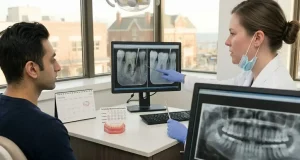
A Note for Oakville Patients
Patients across Oakville, Burlington, Mississauga, and the surrounding Halton Region often delay seeking a periodontal evaluation because regular cleanings feel perfectly normal to them. Gum disease earns its reputation as a silent condition precisely because it does not hurt in its early and moderate stages. By the time pain arrives, the disease is usually advanced.
If your general dentist has mentioned deeper pockets, a need for a deep cleaning, or has referred you to a specialist, acting on that recommendation sooner rather than later makes a significant clinical difference. Early moderate periodontitis responds far better to scaling and root planing than advanced disease does, and the window for avoiding surgical intervention is directly tied to how quickly treatment begins.
Frequently Asked Questions
Is a deep cleaning painful? With proper local anesthesia, the procedure itself should not be painful. You may feel vibration and pressure, but not sharp pain. Post-procedure soreness is normal and manageable with standard pain relievers.
How long does deep cleaning take? Each quadrant typically takes 45 to 90 minutes. Depending on how the mouth is divided, full-mouth treatment is usually completed in 2 appointments.
Will my insurance cover deep cleaning in Ontario? Most standard dental insurance plans in Ontario cover scaling and root planing under periodontal benefits, though coverage levels vary. The Canadian Dental Care Plan (CDCP) also includes periodontal treatment for eligible patients. It is worth confirming your specific coverage with both your insurance provider and the dental office.
How often do I need deep cleaning? A single course of scaling and root planing is typically recommended to bring gum disease under control, followed by periodontal maintenance every 3 to 4 months indefinitely. Repeat deep cleaning may be recommended if pockets remain persistently deep after the initial healing period.
Can I avoid deep cleaning by brushing better? Improved home care can slow the progression of gum disease and is essential for long-term success, but once calculus has built up below the gum line and pockets have formed, brushing and flossing alone cannot remove the deposits or eliminate the infection. Professional intervention is required.